

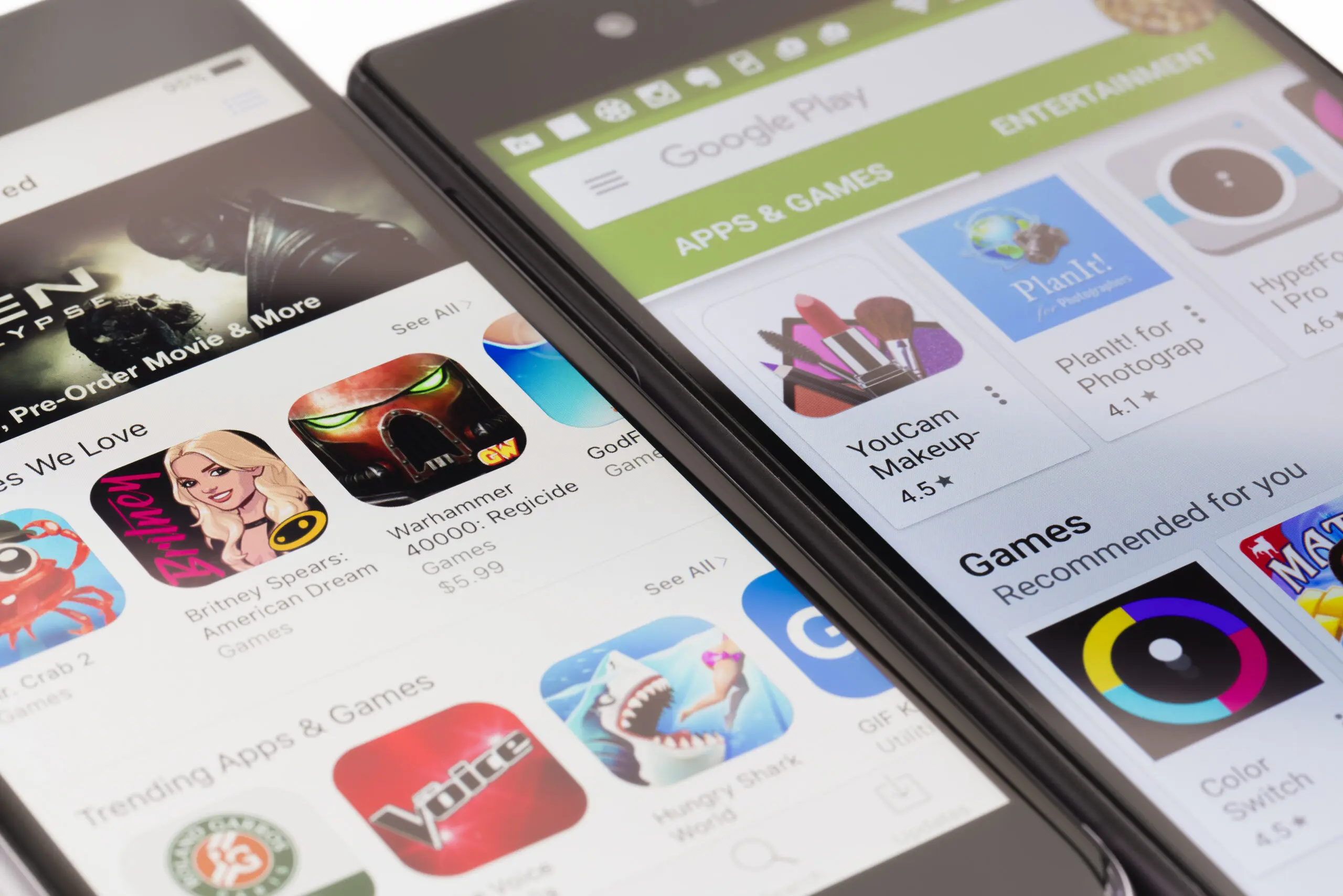
Competition watchdog closes investigations into Apple and Google app stores
The Competition and Markets Authority is looking to the new digital markets competition laws to resolve concerns about high prices and reduced choice
The UK’s competition watchdog has closed investigations into Apple and Google’s app stores ahead of the rollout of new digital markets laws, but warned the firms could face fresh scrutiny under the new rules.
The Competition and Markets Authority (CMA) said it was closing its existing cases involving the tech giants ahead of a new regime coming into force as part of the Digital Markets, Competition and Consumers Act (DMCCA), which passed into law in May.
Under the new rules, firms can be designated as having ‘strategic market status’ in connection with any digital activities in the mobile sector and have requirements placed on their conduct by the CMA, with significant fines if those requirements are breached.
The CMA said the new rules would enable it to consider issues raised more ‘holistically’ than under the existing Competition Act rules.
Will Hayter, executive director for digital markets at the CMA, said:
‘Once the new pro-competition digital markets regime comes into force, we’ll be able to consider applying those new powers to concerns we have already identified through our existing work.’
He added: ‘It’s critical that tech businesses in the UK, including app developers, can have access to a fair and competitive app ecosystem, helping to grow the sector, boost investment and result in better outcomes for UK consumers.
‘These are all factors we are considering before launching our first investigations under the new regime.’
The CMA has said it expects to launch around three to four new investigations into firms with strategic market status within the first year of the new powers coming into force. This is expected later this year.

Investigations into Apple and Google App stores
The CMA’s investigations had been looking into concerns that Google and Apple were exploiting the dominant market positions of their respective Google Play and App Store platforms to set unfair terms for UK app developers.
It has said this may be restricting competition and consumer choice, and potentially lead to higher prices and reduced choice for app developers.
The cases focused on the rules which require app developers offering digital content, such as games, to use the tech giants’ own billing systems.
The regulator said those cases were closed on the grounds of administrative priorities and it had not taken any decisions on whether the Competition Act had been infringed.
Google’s response to CMA concerns
The announcement around the existing investigations comes at the same time as the CMA rejects a set of proposed commitments submitted by Google in response to the regulator’s concerns around its Play Store billing system.
Google’s proposals would have given app developers the ability to use alternative payment options to Google Play’s billing system. The CMA said it is not satisfied that Google’s proposed commitments address its competition concerns effectively.
Feedback it had received from app developers suggested Google’s proposals to allow app developers to use alternative payment methods for in-app payments did not go far enough and they would in practice remain tied to the Google payment system.
Specifically, app developers referred to the level of commission they would still be paying to Google, and to the proposed ‘pop-up screens’ that might put users off completing a transaction.
The CMA decision concluded that it is ‘not satisfied that the proposed commitments would adequately ensure that the option of offering an alternative billing system is an effective one for app developers, by providing those app developers wishing to switch with realistic scope to do so.’
The CMA said it had engaged in further discussions with Google but no suitable revised comments were made.
Are consumers paying too much for apps?
Two separate class action lawsuits against Apple and Google have been launched on behalf of consumers who are said to have paid too much for Play and App Store purchases.
When you pay to download an app or digital content as much as 30% of what you spend goes straight to Apple or Google. This is because app developers must use the tech giants’ payment systems to sell their apps, and it is here where charges are added.
The claims against Apple and Google argued that these restrictions stop app developers from offering lower prices and leaves consumers paying more than they should.
Digital economy and society lecturer, Dr Rachael Kent, has filed a £1.5 billion claim against Apple on behalf of UK consumers and businesses. She says Apple has breached competition law by abusing its dominant position by charging these excessive prices. Her trial against Apple begins in January 2025.
Consumer tech policy expert, Liz Coll, has launched a £920 million claim against Google on behalf of UK consumers. She says that Google has breached competition law by abusing its dominant position to charge these excessive prices. Her trial against Google starts in October 2025.
New digital markets act in Europe
Apple and Google have recently begun loosening some of the controls around its app stores in the EU because of the introduction of new digital markets and competition legislation in Europe.
The new Digital Markets Act has introduced sweeping new rules designed to stop the big tech firms from cornering digital markets. Apple has been forced to allow people in Europe to download iPhone apps from stores not operated by the US tech giant, a move it has long resisted.
As a result, Fortnite is back on mobile devices in Europe after developer Epic Games confirmed the launch of its own app store on Apple’s iOS and Google’s Android.
This follows a long-running battle between Epic and the tech giants over their control of their app stores and developer commission fees, with the stand-off seeing Fortnite being pulled from both Apple and Google app stores in 2020, and a number of legal and regulatory cases since.
In the UK, iPhone users must wait until next year for the rollout. Epic is suing Google in the UK and its case is now set to be heard alongside Liz Coll’s claim.
A US judge last week indicated he will order major changes in Google’s Android app store to punish the company for engineering a system which a jury declared an illegal monopoly that has hurt millions of consumers and app developers.
Related claims
-
Apple Pay
Apple sued over Apple Pay practices that allegedly pushed up banking charges for 50 million consumers.
-
Amazon & Apple
Bought a new Apple or Beats product through Amazon in the UK? Find out if you’re included in the compensation claim and what you need to do.
-
Google Play Store Claim
Millions of UK Android users could be included in the Google Play Store claim – check what purchases count and whether you could be affected.