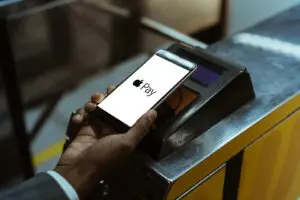
Your legal right to refunds on credit and debit card purchases, including Section 75 of the Consumer Credit Act 1974, chargeback and how to claim.
Last updated on 25 June 2026
In this guide…
What you need to know about your refund rights
When can you use section 75?
Your credit card provider is jointly responsible with the retailer if something goes wrong with purchases costing between £100.01 and £30,000. This is known as Section 75. It kicks in when there’s been a breach of contract or misrepresentation by the retailer – meaning the goods or services you paid for either weren’t delivered as promised, didn’t meet legal standards or weren’t what you were told you were buying.
Common reasons for making a Section 75 claim include faulty goods, items not matching their description, things that never arrived or when the company has gone bust. You can also claim if services weren’t carried out properly, or if you were actively misled about what you were buying. If a faulty product caused damage to your property (such as a leaking washing machine that ruined your floor), you can claim for both the item and the damage.
Section 75 applies to purchased made with:
- Credit cards
- PayPal Credit
- Certain point-of-sale finance agreements
Important: Section 75 and chargeback claims are made against your card provider, not the retailer, although you should usually try to resolve the issue with the seller first.
When Section 75 doesn’t apply
You won’t be covered by Section 75 if:
The item cost £100 or less. Each individual item must cost over £100. If you bought two items for £60 each (£120 total), you’re not covered as neither single item exceeded £100.
The item cost over £30,000. Purchases above this amount aren’t protected.
You paid by debit card. Section 75 only covers credit purchases. For debit cards, you’ll need to use chargeback instead.
You bought from a third-party seller. Purchases through platforms like Amazon Marketplace, eBay or Vinted where you’re buying from another individual aren’t covered. Your contract is with the individual seller, not the platform.
You used Buy Now Pay Later. Services like Klarna, Clearpay or PayPal Pay in 3 aren’t covered by Section 75. Check the provider’s own buyer protection schemes instead.
You withdrew cash from your credit card. Using your credit card to get cash, then spending that cash, means no protection.
You changed your mind. Section 75 only covers problems with goods and services, not buyer’s remorse.
You used an intermediary payment service in some circumstances. Using services such as PayPal can sometimes break the direct relationship needed for Section 75 protection, although some purchases may still qualify depending on how the payment was processed.
How to make a Section 75 claim
If something’s gone wrong with a purchase, follow these steps:
1. Try to resolve it with the retailer first
Although you don’t legally have to contact the retailer before making a Section 75 claim, it’s usually worth trying. They may resolve the issue quickly through their complaints process.
Contact them in writing (email is fine) explaining the problem and what you want – a refund, repair or replacement. Keep copies of all correspondence.
2. Gather your evidence
Before contacting your credit card provider, collect:
- Proof of purchase (receipt, order confirmation, credit card statement)
- Details of the transaction (date, amount, description)
- Evidence of the problem (photos of faulty goods, correspondence with the retailer)
- Any contracts, terms and conditions or product descriptions
- Independent reports if relevant (for example, a mechanic’s assessment of a faulty car)
3. Contact your credit card provider
You can make a Section 75 claim in three ways:
Through your banking app or online. Many banks now let you dispute transactions through their app. Look for options like “dispute a transaction” or “problem with a purchase.”
By phone. Call the customer service number on the back of your card. Ask to make a “Section 75 claim” – the staff should know what this means.
In writing. Send a letter or email to your card provider. Be clear that you’re making a claim under Section 75 of the Consumer Credit Act 1974.
What to include in your claim:
- What you bought and when
- How much you paid (total cost and how much went on the credit card)
- What went wrong
- What you’ve done to try to resolve it
- What you want (refund, repair, replacement, compensation)
- Why Section 75 applies (breach of contract or misrepresentation)
- Copies of supporting evidence where possible, including screenshots, photographs and expert reports.
4. Wait for a response
Your card provider should investigate and respond. There’s no set timeframe, but if they haven’t resolved your claim within eight weeks, you can escalate to the Financial Ombudsman Service.
The card provider may:
- Approve your claim and refund you
- Ask for more evidence
- Reject your claim
If your Section 75 claim is rejected, you can complain to the Financial Ombudsman Service (FOS) – a free, independent service. If they rule in your favour, your card provider must comply. The FOS can order your card provider to refund your money, pay compensation for trouble and inconvenience, and cover costs you’ve incurred.
When can you use chargeback?
Chargeback lets you challenge and reclaim payments made using a debit or credit card. It is not a legal right but is part of the rules of Visa, Mastercard and American Express, which participating banks subscribe to.
You can use chargeback when:
- Goods didn’t arrive
- Goods were faulty or not as described
- The company has gone bust
- You were charged the wrong amount or charged twice
- You were a victim of fraud and did not authorise the purchase
What you can claim: With chargeback you can only reclaim the amount you paid on that card – unlike Section 75, you won’t get back more than you put on the card.
The 120-day time limit: You typically have 120 days from the transaction date, or from when you expected to receive the goods or service, to make a chargeback claim. Contact your bank as soon as you identify a problem as the clock may already be ticking. In some cases the time limit can be shorter depending on the card scheme rules, so contact your bank as soon as possible.
How to make a chargeback claim
1. Try to resolve it with the retailer first
You must try to get a refund from the retailer before attempting chargeback.
2. Contact your bank
Contact whoever issued your card, not Visa or Mastercard directly. Tell them you want to make a chargeback claim. Your card provider might call it something else, such as “disputed transactions” – if you ask for chargeback they will know what you mean. You can usually do this via phone, your banking app or online banking.
3. Provide your evidence
Give your bank full details of the transaction and provide copies of any correspondence you had when you tried to get your money back from the seller — including letters, emails or records of phone calls. Some banks will ask you to fill out a claim form; others take details of the transaction and start the claim for you.
4. Wait for a response
There’s no set timeframe for your card provider to resolve a chargeback claim. If you’re unhappy with the outcome or how long it’s taking, you can complain to your provider, they then have eight weeks to deal with the complaint. If they refuse to pay up, you can ask for a letter of deadlock and refer your dispute to the Financial Ombudsman Service. If more than eight weeks have passed, you can go to the FOS without a deadlock letter.
Watch out: A chargeback refund can be disputed by the retailer. Your card provider will contact you if there’s a challenge – if you can, it’s a good idea to keep the money for a few weeks just in case.
How to escalate to the Financial Ombudsman
The Financial Ombudsman is free to use and is independent of banks and card providers.
You can escalate your claim to the Financial Ombudsman if:
- You’re unhappy with your card provider’s response, complain to them first following their complaints procedure
- You’re still dissatisfied after their response (or eight weeks have passed since your original claim), contact the FOS
- The FOS will investigate and make a decision. If they rule in your favour, your card provider must comply
The Financial Ombudsman can order your card provider to:
- Refund your money
- Pay compensation for trouble and inconvenience
- Cover costs you’ve incurred as a result of the problem
You have up to six years to make a Section 75 claim in England, Wales and Northern Ireland (five years in Scotland), so you’re not under immediate time pressure like you would be with chargeback.
Section 75 vs chargeback: what’s the difference?
Section 75 is often confused with chargeback, but they’re different types of protection:
| Section 75 | Chargeback | |
| What is it? | Legal protection under UK law | Part of Visa, Mastercard and Amex rules |
| Card types | Credit cards only | Credit, debit and charge cards |
| Purchase amount | £100.01 to £30,000 | Any amount (although Mastercard chargeback usually has a £10 minimum) |
| Time limit | 6 years (5 in Scotland) | Usually 120 days |
| How much you can claim | Full purchase value | Only the amount paid on that card |
| Strength | Legal right | Not legally guaranteed |
When to use each one
Use Section 75 if:
- You paid on a credit card
- The total cost was over £100
- You want to claim the full amount (even if you only paid a deposit on the card)
Use chargeback if:
- You paid by debit card
- The purchase was under £100
- You’re outside the Section 75 limits
- You need to act quickly (within 120 days)
If you’re covered by both, it often makes sense to try chargeback first for straightforward cases (item didn’t arrive, event cancelled). If that doesn’t work, you can then use Section 75. This way you don’t risk missing the chargeback deadline.
Common questions about your refund rights
This is a grey area. Section 75 technically protects the person who has the credit agreement, usually the main cardholder. If you’re an additional cardholder who made the purchase, the main cardholder should make the claim. Some card providers are flexible on this, but it can complicate claims.
If you bought a subscription, concert tickets or other service in someone else’s name, Section 75 may not apply as you’re not the one receiving the goods or services. However, if you bought a physical gift that you intended to give to someone, you should still be covered.
Yes. Section 75 covers purchases made overseas – whether you bought something online from a foreign retailer or made a purchase while on holiday. Your credit card provider remains jointly liable.
Yes. Section 75 and chargeback are commonly used when a retailer or travel company has ceased trading and you cannot get a refund directly.
If your main purchase goes wrong and you’ve incurred additional costs as a result, you may be able to claim these too. For example, if your holiday was cancelled and you’d separately booked train tickets to the airport, you could claim for both.
You can still make a Section 75 claim for the outstanding amount you’re owed.
There are legal arguments that having another party involved in the transaction process takes away Section 75 protection. If you use your credit card to pay through PayPal and the funds go direct to the seller, and the company has a Commercial Entity Agreement with PayPal, you may still be able to claim – but it’s not guaranteed. PayPal also offers its own buyer protection scheme, so it’s worth checking if you’d be covered by that.
For chargeback, if you’ve topped up your PayPal balance and used that credit to pay, the transaction won’t be classed as a card transaction and is unlikely to be covered. If you want to ensure protection, pay the trader directly with your credit card where possible.
Yes, you can make a claim even if the credit card account is now closed.
Tips for successful claims
Get free advice from consumer helplines
If you’re struggling with a Section 75 or chargeback claim, or just need help with a tricky situation, free advice is available:
- Citizens Advice (England and Wales): 0808 223 1133 or visit citizensadvice.org.uk
- Consumer Advice Scotland: 0808 164 6000 or visit consumeradvice.scot
- Consumerline (Northern Ireland): 0300 123 6262 or visit nidirect.gov.uk
These services can help you understand your rights and support you through the claims process.
About Consumer Voice
Consumer Voice helps people get back money they may be owed when companies get it wrong. We explain your rights clearly, so you can understand whether you may be owed compensation, whether you can join a claim, and what steps to take next.
Related claims
-
Apple Pay
Apple sued over Apple Pay practices that allegedly pushed up banking charges for 50 million consumers.
-
Apple Pay Claim Team
Apple faces collective legal action over unfair charges borne by UK consumers using Apple Pay. This action is led by a consumer rights campaigner and one of the UK’s top group litigation law firms.
-
Apple Pay Claim FAQs
Find answers to common questions about the Apple Pay consumer claim, including eligibility, opt-out rights, funding, costs, and how collective actions work.