

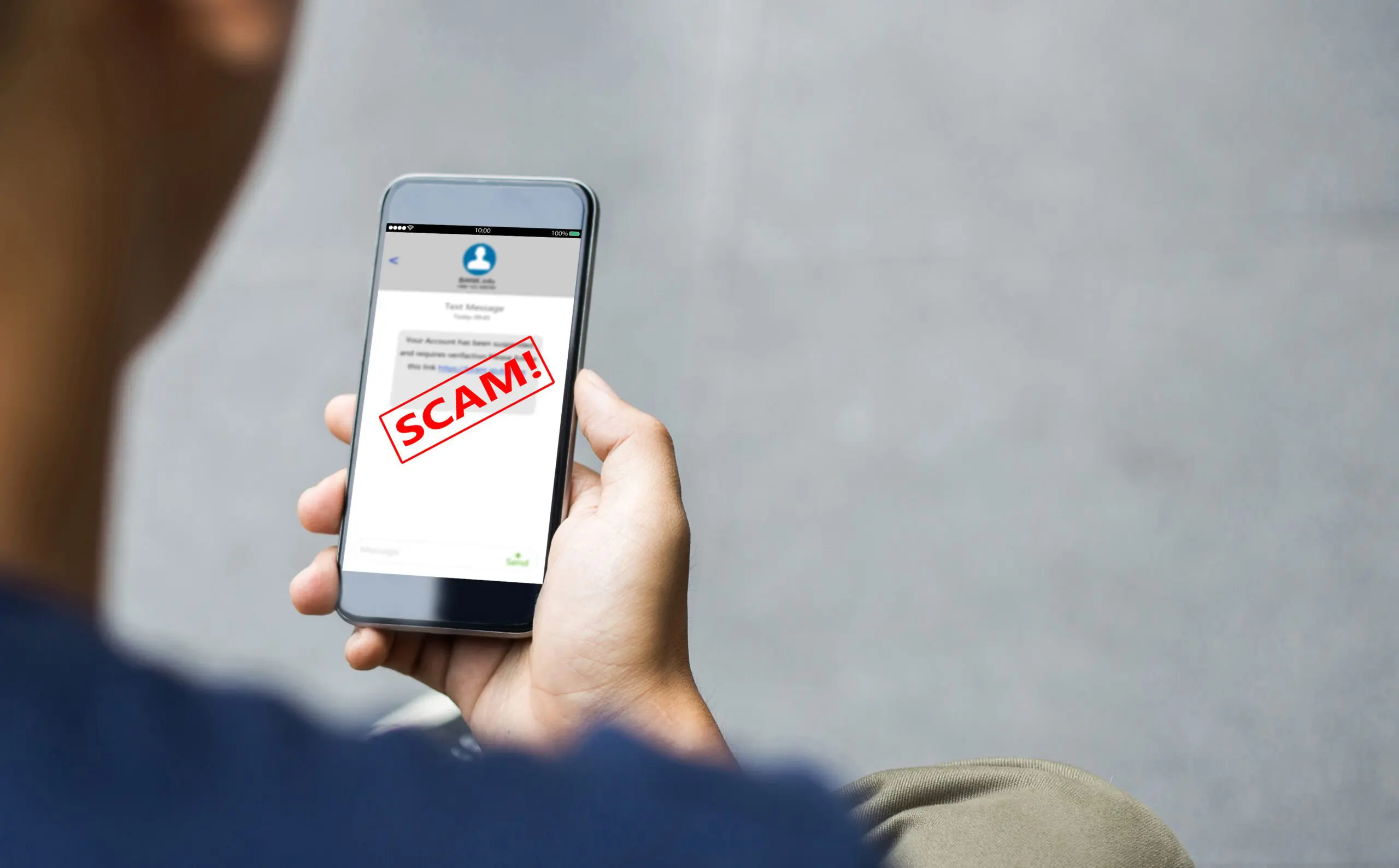
Nine million people caught out by financial scams in the past year
Citizens Advice finds one in five people across the UK fell victim to a financial scam – such as a fake pension or investment opportunity – over the past year
Around one in five (18%) people across the UK have fallen victim to a finance scam – such as a fake pension or investment opportunity – in the past year, research for Citizens Advice indicates.
The charity estimates 9 million people have been affected. It also found that over three-quarters (76%) of victims of financial scams were exposed to them through social media sites.
Dame Clare Moriarty, chief executive of Citizens Advice, said:
‘Anyone can fall victim to a scam and we know scammers aren’t only targeting those looking to invest money, but also those simply going about their day-to-day lives.
‘It’s particularly worrying to see the impact on people’s finances afterwards, especially if they have to borrow to get by.
‘It’s important for us all to be on our guard – if you’re not sure about something, take your time and get advice.’
Citizens Advice surveyed 2,117 consumers from across the UK aged 18 or over, weighting the results so they were nationally representative.

Top scams exposed
Citizens Advice has launched its scams awareness campaign to help people stay safe by exposing the top tactics scammers’ are using. The biggest financial scams people faced over the last year were:
- Fake debt advice via social media – estimated 3 million people affected. A person searches for ‘debt help’ on social media but gets snared by scam accounts. These accounts offer help with personal finances – including debt solutions – then push forms to get hold of personal data.
- Friend-in-need scams – estimated 2.5 million people affected. A scammer poses as someone a person knows to either ask for money or ask the person to forward a 6-digit verification PIN number (which will then give access to the victim’s accounts).
- Pension scams – estimated 2.5 million people affected. The scammers get in touch unexpectedly to offer free pension reviews with big promises. They then move the person’s money into what are actually badly run, high risk or entirely fake investments. Some scammers will offer to help a person release funds from their pension without fully explaining the implications, or charge massive fees to do so, and then move the money into their own schemes.
- Investment scams – estimated 2.5 million people affected. The scammer convinces a person to move their money into a fictitious fund, or to pay for what later turns out to be a fake investment, including gold, property, carbon, cryptocurrencies or even wine.
- Parking QR code scams – estimated 2.5 million people affected. Stickers with bogus QR codes placed over genuine codes at car parks, directing consumers to fake payment websites where their personal and financial information is stolen.
Case study: cryptocurrency scam victim left traumatised
One individual who turned to Citizens Advice for help after falling victim to trading and cryptocurrency scam said: ‘I was frantic, traumatised and couldn’t face telling my family how much I’d lost.’
He had watched an online tutorial video about a legitimate trading system, but alongside it was an advert leading to a fake platform run by scammers.
He recounted: ‘After I started putting money into the “trading system”, I immediately got aggressive phone calls several times a day, saying: “You’ve got to keep trading or you’ll lose everything.”’
Any requests to withdraw my money were ignored. This cost him his savings, home and health. He told Citizens Advice he had never experienced such disastrous financial trouble like this.
‘It’s a very unpleasant, stressful, intensive and coercive experience. I was frantic, traumatised and couldn’t face telling my family how much I’d lost.
‘I’d never experienced such disastrous financial trouble like this in the past. I’d paid off my mortgage and had a nice house, a family home. I had no clue that you could so easily lose all that almost overnight.’
The devastating impact on peoples’ finances
Over two in five of those scammed (43%) had to borrow or increase their debt in some way to get by afterwards. Almost a quarter (24%) had to turn to friends or family for financial help, while a fifth (20%) had to take on additional jobs or shifts at work.
John Herriman, chief Executive of the Chartered Trading Standards Institute (CTSI), wants to see the stigma attached to being a scam victim removed:
‘CTSI is very concerned to see the number of people that are targeted every year by financial scams, whether these are fake debt, pension advice, or parking scams.
‘The vast number of people affected by these scams shows there is an urgent need for more consumer awareness in this area.
‘The hope is that this campaign will remove the stigma associated with being the victim of a scam and that those affected can be empowered to come forward and help to bring these criminals to task.’
What to do if you’ve been affected by a scam
Talk to your bank or card company immediately if you’ve handed over any financial and/or sensitive information, or made a payment that you’re concerned about.
Report the scam to Action Fraud on 0300 123 2040. You can also contact the Citizens Advice consumer service for help with what to do next.
Lord Michael Bichard, chair of National Trading Standards, said: ‘We urge anyone who has been a victim of a scam to report the crime.
‘Underreporting of scams is a major problem and we need people to come forward so we can stop these criminals in their tracks.’
Herriman added: ‘By consumers reporting these scams it allows for more accurate intelligence to be collected and for emerging and growing issues to be identified early on so preventative action can be put in place.’
How to avoid becoming a victim of unscrupulous scammers
Lord Bichard said: ‘People should be wary of anyone offering financial advice out of the blue, particularly on social media.
Jane Parsons, a Citizens Advice consumer expert, offers other steps you can take to spot scams and better protect yourself:
- Be wary if an offer seems too good to be true – for example, a pension that yields much more than you’d expect.
- Don’t be pressured to transfer money quickly.
- Be cautious if you’re asked to pay in an unusual way – like using an iTunes voucher or a transfer service.
- Avoid giving away personal information, such as passwords, PINs or verification codes.
- Make checks to ensure the organisation or person you are dealing with is genuine – for example, look closely at the email address.
- Take a step back – ask a friend or family member what they think or do an internet search to look at what others are saying.
Related claims
-
BT Landline
BT sued for up to £1.3 billion in a claim representing 3.7m customers who were overcharged. The court has decided not to award compensation and an appeal was refused.
-
Facebook data misuse
Facebook faces a £2.1bn legal claim that alleges it exploited 46m UK users by unfairly profiting from their data. Sign up to stay updated.
-
Bitcoin SV
A £9.9bn lawsuit claims four major cryptocurrency exchanges caused thousands of consumers to lose money they invested. Sign up to stay updated.