

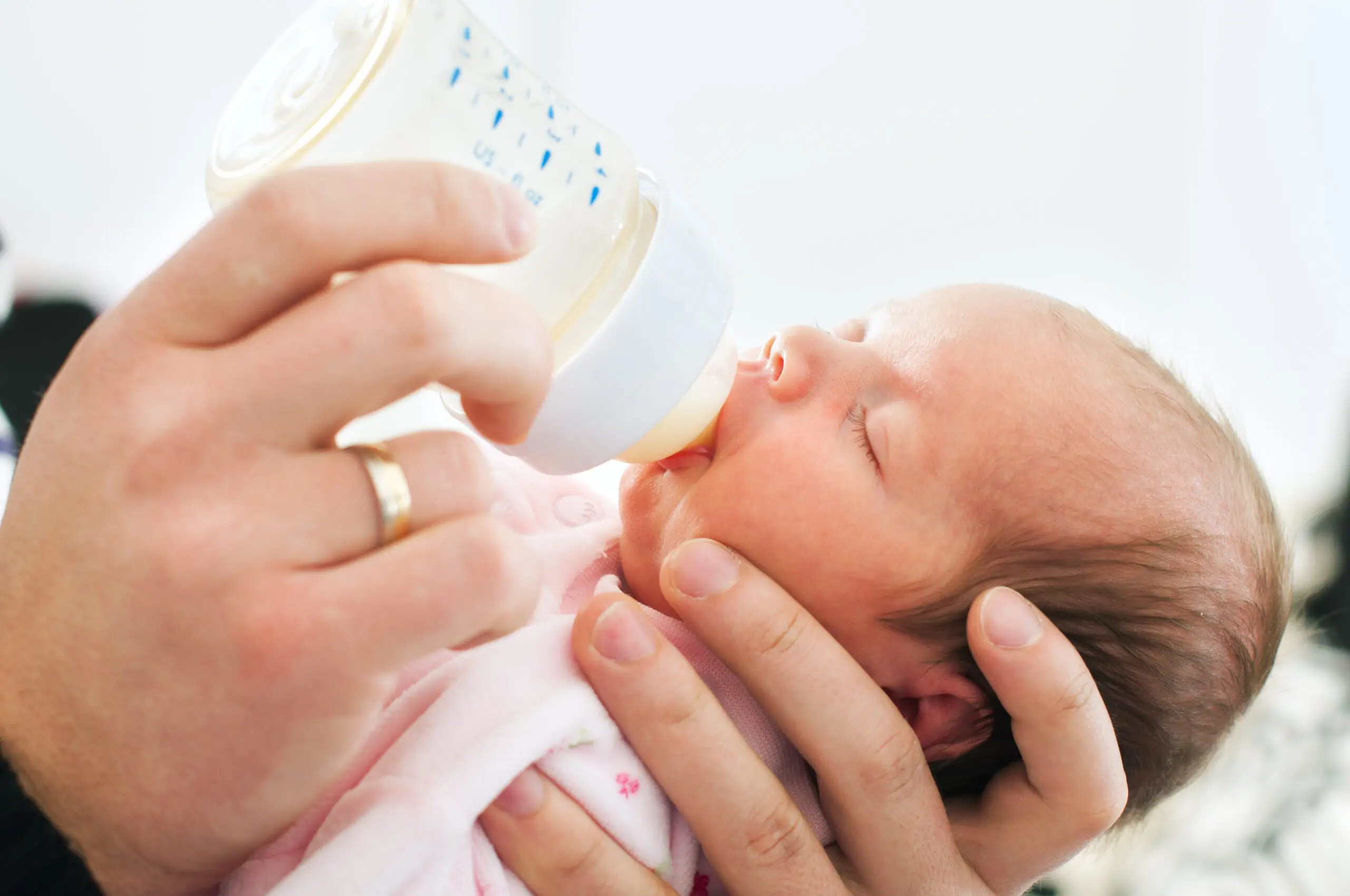
Competition watchdog says parents are paying ‘over the odds’ for baby milk
Parents have been ‘shouldering the increasing price’ of baby milk due to limited incentives for the infant formula market to compete on price.
Parents could be making savings of up to £500 over a baby’s first year by switching to a lower priced brand. Yet, unlike many other grocery categories, there are limited incentives for baby formula manufacturers to compete on price.
Prices on baby formula in the UK shot up by 18% to 36%, depending on the brand, over two years between December 2021 and December 2023. With just three companies – Danone, Nestle and Kendamil – making up more than 90% of sales.
The Competition and Markets Authority’s (CMA) interim report on baby milk formula says the market needs a shake-up to help struggling parents.
Sarah Cardell, chief executive of the CMA, said:
‘This is a very important and unique market. We’re concerned that companies don’t compete strongly on price and many parents – who may be choosing infant formula in vulnerable circumstances and without clear information – opt for more expensive products, equating higher costs with better quality for their baby.’
Recommendations include incentivising competition to drive down costs, strengthening labelling and advertising rules, greater restrictions on branding. The CMA launched its investigation into the infant formula market in February 2024 and is due to publish a final set of recommendations are due in February 2025.

Strict rules around advertising and labelling
The CMA said it is concerned that some aspects of the strict rules around advertising and labelling of baby formula could have had unintended consequences, contributing to consumers paying higher prices.
Regulations currently dictate that companies cannot promote infant formula, including price reductions or deals, so as not to discourage breastfeeding.
The CMA found that due to limited incentive to compete on price, there is little pressure on manufacturers or retailers to shelter customers from increases in manufacturing costs.
It says these have largely been passed on quickly and in full, which has led to parents shouldering the increasing price of formula for several years.
Maxine Palmer, head of service development at parenting charity NCT, said: ‘Companies are exploiting new parents who rely on formula milk to feed their baby.
‘With skyrocketing prices, lack of accountability, regulations and guidance in place for formula milk providers, parents are torn between the ‘best’ product to feed their baby and the essential costs of living.
‘The important public health message – that all infant formulas meet their baby’s nutritional needs – is getting lost through the influence of formula milk branding and marketing.
‘This can lead new parents to spend more than they need on products promoted as ‘premium’ or ‘advanced’ that must and do contain the same nutritional benefits as the least expensive.’
Parents choosing a formula at a vulnerable time
The CMA’s consumer research found that parents often choose a formula for the first time in vulnerable situations – often in hospital immediately after birth.
And, frequently, without access to clear, accurate and impartial information needed to make an informed decision.
Decisions around infant formula also come with a high amount of pressure, as parents naturally want to do what is best for their baby. This can lead to parents actively choosing a more expensive product – assuming a higher price means better quality.
This is despite NHS advice that ‘it does not matter which brand you choose, they’ll all meet your baby’s nutritional needs, regardless of price.’
Palmer added: ‘No parent should be put in a position where they are exploited into buying more expensive formula milks through misleading branding and marketing tactics.’
Clear information for parents needed
The CMA has for now stopped short (for now) on recommending price caps but has made a number of recommendations to improve the sector and reduce costs for parents. These include:
- It says parents should be provided with clear, accurate and impartial information, and be provided with a wider range of formula options to choose from or using standardised infant formula packaging, in hospitals.
- In shops, it says clear, accurate, and impartial information – including on nutritional sufficiency – should also be provided at the point of sale
- It wants to incentivise competition on price by potentially permitting prices and price reductions to be publicised.
- It wants to strengthen the role of national authorities’ – the Department for Health and Social Care, Scottish Government, Welsh government and Foods Standards Agency in Northern Ireland – to approve the packaging of all infant formula products before they are placed on the market.
- Introduce measures to moderate the role of brand awareness in decision-making by, for example, requiring entirely different branding for infant and follow-on formula or implementing stricter thresholds for certain types of on-pack messages.
The largest manufacturer Danone – which makes Aptamil and Cow & Gate and accounts for over 50% of sales – is reported as saying it ‘agrees with the CMA that there should be a focus on the information parents receive in healthcare settings, and in particular on the differences between infant formulas.’
Nestle said it would ‘continue to work constructively with the CMA as they further explore market outcomes.’
Kendamil said its product is ‘the only British-made baby milk… driving reduced pricing.’
Related claims
-
Amazon & Apple
Bought a new Apple or Beats product through Amazon in the UK? Find out if you’re included in the compensation claim and what you need to do.
-
Sony PlayStation UK claim
Millions of UK gamers could be owed money in the Sony PlayStation claim, which alleges prices were inflated by up to 20% due to a lack of competition.
-
Steam
Valve Corporation – owner of gaming platform Steam – is accused in £656m compensation lawsuit of overcharging 14m UK consumers.